
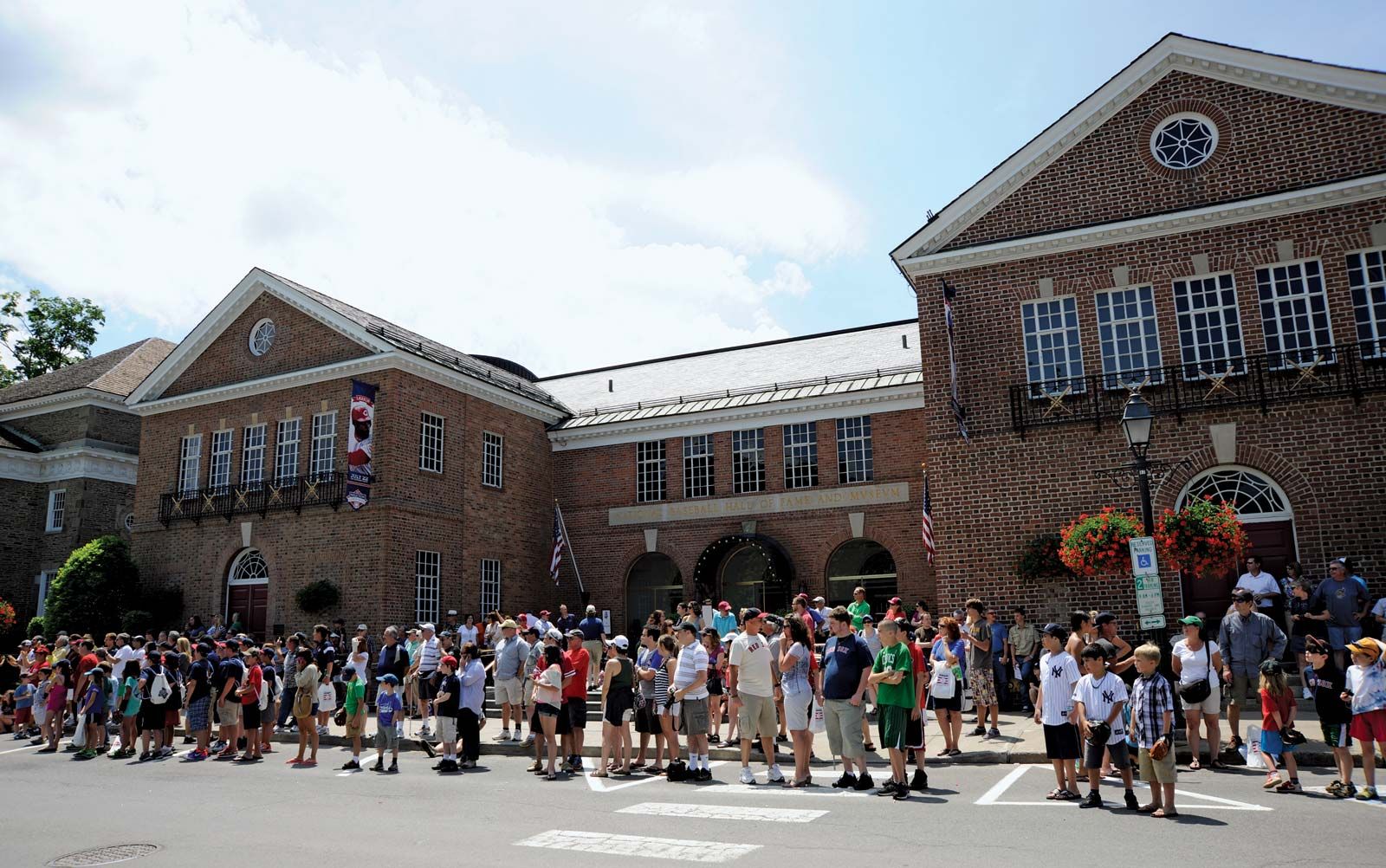
The winter has not started off so great. The weather in Northeast Tennessee has been colder than it ought to be for December, which makes me nervous about January and February, which are generally our bad-weather months. And then the Contemporary Baseball Era Committee elected Jeff Kent to the Hall of Fame in Cooperstown, New York.
Now, I do not know Mr. Kent, never met him, and doubt that I ever will. I have nothing against him personally, or professionally; I think he was an excellent hitter throughout his 17-year major league career. And yes, I know he hit more home runs than any second baseman in history (351 of his 377 round-trippers were hit while he was playing the keystone), which did surprise me; prior to that fact being offered up as a primary reason for his election, I would have thought that Joe Morgan or Ryne Sandberg held that distinction. (Turns out that neither of them reached 300 dingers, but Rogers Hornsby and Robinson Canó did.) Kent was also on five National League All-Star teams, was the NL MVP in 2000, and is the only second baseman to drive in 100 or more runs in six consecutive seasons.
Good numbers, good career, without question. But does that add up to the Hall of Fame?
I have been noticing a trend these past few years – players who were very good are finding their way into the Hall of Fame. Supposedly reserved for the best of the best, like Babe Ruth and Ty Cobb and Jackie Robinson and Walter Johnson and their peers, the bar for membership in baseball’s hallowed shrine seems to have been lowered. Jeff Kent is just the most recent player to benefit from this “dumbing down” of the standard.
There used to be just two ways to get elected: the annual vote by accredited members of the Baseball Writers Association of America, and by selection of the Veterans Committee. It was the latter that often came under fire for its decisions. Comprised primarily of former players, managers and executives, it was frequently called a “good old boys” club when they elected Billy Herman, Ron Santo, Joe Gordon and others, players who had played with and against members of the committee. This is not to say that Billy Herman, Ron Santo and Joe Gordon were not excellent players, but were they Hall of Famers?
In 2010, the Veterans Committee morphed into new working groups, each focusing on different time periods. The Golden Age Committee looks at players from, roughly, a twenty-year period beginning around 1950. The Contemporary Baseball Era Committee, on the other hand, starts around 1980 and continues to the present; these are the people who selected Jeff Kent. At one time, the Veterans Committee was also responsible for looking at fellows who played in the late 19th and early 20th centuries, as well as (eventually) stars of the Negro Leagues. They gave us some very worthy people, such as Dodger shortstop Pee Wee Reese and slugging first baseman Johnny Mize, managers Walter Alston and Bill McKechnie, umpire Al Barlick and executive Branch Rickey. They also chose some folks whose credentials were, well, somewhat dicey, like outfielders Hack Wilson and Enos Slaughter, infielders Phil Rizzuto, Johnny Evers and Fred Lindstrom, and every single Commissioner with the possible – POSSIBLE – exception of Judge Landis. And those are, of course, simply a handful of names in both categories. It would seem, however, that old-timers such as these do not fall under the purview of the current committees.
So I guess, if Joe Gordon and Johnny Evers belong in Cooperstown, so does Jeff Kent. But do they? Same questions for people like Slaughter and Lindstrom and, in my opinion, many others, especially some people anointed over the past few years. In 2018, for instance, there were six inductees. Hardly anyone would quibble over Trevor Hoffman or Chipper Jones, but I’m not sure about Vlad Guerrero, Jack Morris, Jim Thome and Alan Trammell. Defense should be an important consideration, but Edgar Martinez and Harold Baines didn’t need gloves for much of their careers since they served as their team’s designated hitters. The numbers for Larry Walker and Todd Helton are certainly skewered because they got to play so many home games in Colorado’s hitter-friendly Coors Field. And Fred McGriff is probably my favorite Braves player of all time, but even if I had a vote I would never have considered him a strong candidate. And yet, all of these – and many more — were excellent players in their own right and probably deserve some sort of recognition after they retire, but what? Friends, I have an answer to that question – the Hall of Excellence.
My wife and I lived in North Carolina – Durham, specifically – for 25 years, and while there I helped establish a SABR chapter which still exists. At one of our meetings, we agreed that not every Tom (Yawkey), Dick (Allen) or Harry (Hooper) deserves a Hall of Fame plaque, and we came up with the idea of a Hall of Excellence. It would honor players who had outstanding careers and were definitely much better than the average Sam Haggertys of the world, but did not quite measure up to the likes of Ichiro Suzuki or Greg Maddux. They could have their own wing, perhaps even their own building, in Cooperstown or elsewhere. It would be a perfectly American thing to do — recognizing hard work and excellence — while at the same time offering something unique: the acknowledgment of those who were outstanding but just shy of legendary.
The establishment of a Hall of Excellence would then require the next logical step: a realignment of the present Hall of Fame, which would move some people from one wing to the other. This may seem kind of harsh, but my thinking (and that of our old NC SABR group) was that it would more correctly reflect their true contributions to the game.
A Hall of Excellence would be the perfect place for Jeff Kent, as well as many others I have already mentioned (sorry, Crime Dog), and quite a few others. And it would leave the Hall of Fame to people like the Babe, Hank Aaron, Sandy Koufax, Roberto Clemente, Walter Johnson, and many, many others. It would also, I think, spark some serious debate among baseball fans: who moves, who does not, and who makes those decisions? Since the people who run Cooperstown seem to be fond of committees, perhaps they could be entrusted with creating and populating a Hall of Excellence committee.
Now, do I think this will ever happen? Sorry, but we all know better than that.
By the way, there will be one more Hall of Fame result announced before the end of January, and it is possible that more not-quite-deserving candidates will make it in. For instance: Carlos Beltran never led his league in any category, not even a minor one; Andruw Jones, like Dale Murphy before him, saw his output decline drastically in his final five seasons; Chase Utley was the very definition of a good, but not great ball player; Cole Hamels won 163 games in fifteen seasons, fewer than Milt Pappas, who is never mentioned as a potential Hall member despite racking up 209 wins (same as Don Drysdale!) in his seventeen years. It looks like my opportunities to fuss could prove to be endless!
Stay warm, amigos, and remember that pitchers and catchers start reporting to their spring training bases in mid-February.